You would think that would be the case when Jesus goes to a
well and runs into a 1) Samaritan, who’s a 2) woman, who’s a 3) loose woman,
and who’s also a 4) ostracized woman. Four strikes and you’re out? Most people would push her aside and
walk right past her as she’d so obviously been ridden hard and put away wet.
But not Jesus.
Jesus stops to talk with her.
Jesus gives her the time of day.
Jesus cares about her.
Jesus came to show this woman love. And in doing this with a
no-name tramp he shows each of us that he intends to do the same.
The metaphor here is ‘living water’ – the translation is ‘love.’
Jesus says drink from that water.
Fill up on that water.
Take that water into yourself so deeply that it comes right
back out.
It is God’s love that is no better demonstrated than by his
care and regard for people for which no one else has any regard. It is the one
thing that can fill us up and keep us. Our Lenten challenge is to drink from
that water, go to the well, ingest what’s there, and let the world benefit from
it.
What does ‘going to the well’ look like for you? How do you
‘drink’ of this living water? Do we
really think that, if God can give it to a woman like this, it’s also available
to you and me?
------------------------
Reading
The War of Art – Steven Pressfield
Sentess – Hammond and Cronshaw
The Lean Startup – Eric Ries
While this may be a no-brainer it is also the most forgotten
axiom in the Christian church.
I must confess, to no surprise of most, that I live much of
my life as a functional atheist – trusting in my own gifts and skills and only
really reaching out for God when I have a problem or need help. Sure, I go to
church and offer thanks and praise, but going through the motions of my
spiritual life is a bigger part of my life than I like to admit.
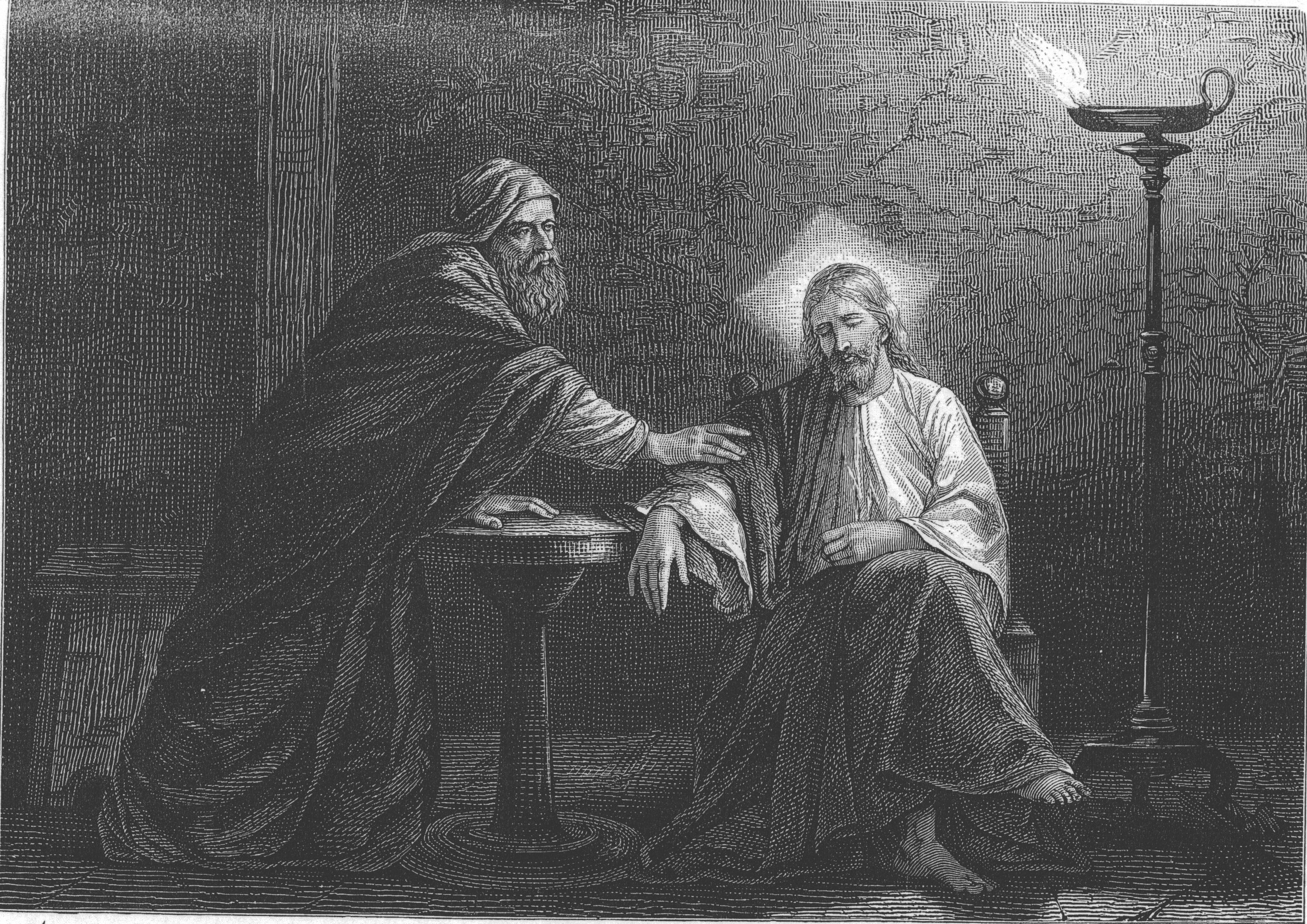
This Sunday you and I will hear about a wise Jewish leader
named Nicodemus whose religion had become such a big part of his life that he
was in danger of leaving God out of the picture.
Thankfully he reached out to Jesus and was reawakened to the
reality of God.
And this is our Lenten challenge as well: to renew our
relationship not with the church or religion, but with God. How can we draw
closer to God during this holy season? After all, this is the most attractive
part, not only of our faith, but of ourselves. Sure, we may be handsome, witty,
well-liked, and well off, but we all know deep down that the most attractive
part of us is the Jesus inside of us. What do we need to do to make that a
bigger part of us?
Jesus never went to seminary.
Jesus never did a church internship.
Jesus never took a General Ordination Exam.
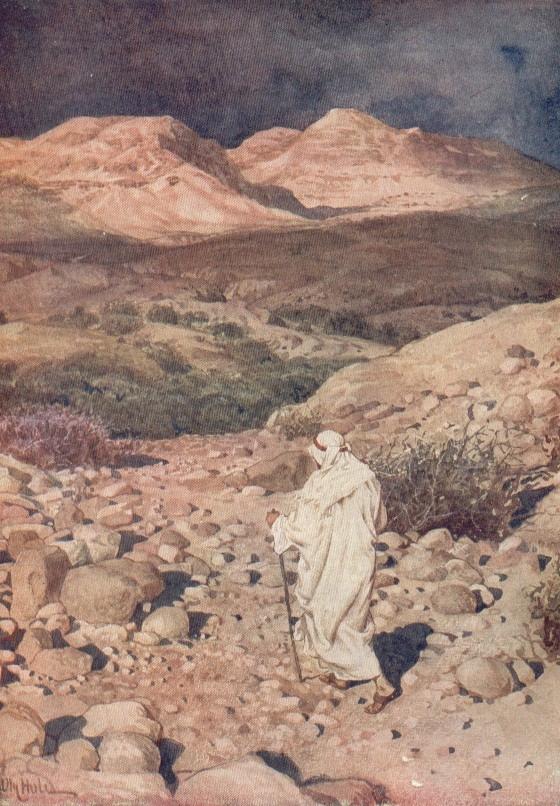
Jesus went into the desert.
Immediately following his baptism, Jesus willingly embraced adversity, went off into a secluded place, and wrestled with his demons.
Then, after 40 days, he emerged, trained and equipped for the work ahead of him.
Ever thought that God wants us to do the same thing – because doing so, like Jesus, can shape us into the kind of people we’re meant to be - to do the work we're meant to do?
Lent is the Church’s invitation for us to willingly embrace our adversity, seek a secluded place, and wrestle with our demons - and bask in its ability to change our lives.
Come with us, into the desert.
While a teenager driving up north with 3 friends, Mike, the driver, decided to veer off the highway and go off-roading on a sandy, two-track.
We were having an absolute ball skidding between pine trees, kicking up sand in the turns, and enjoying a litany of roller coaster hills.
Then, going way too fast up one of those sandy hills, we crested - only to discover a big pine tree right in front of us, too close to avoid and too tall to run over. Adrenaline gushed, there were gasps and fierce grips as we slammed into the tree. I remember opening my eyes and seeing my friends. Silence gripped us as we all looked out the front windshield to see we’d bowled over and mounted the huge tree. And all we could do was sit there for a very long time.
I don’t remember what broke our silence, but it could have been the same words Jesus used in Sunday’s gospel: ‘Get up and do not be afraid.’
Although Jesus was talking to his disciples who had just witnessed The Transfiguration, these are words for all of us faithful souls who have had life-altering experiences that resist explanation. Maybe it was a car wreck, the death of a child, the loss of a job, or a disastrous business venture. They are life’s ‘what was that all about?’ experiences, and God wants us to know that we never, ever, go through it alone.
We note that Jesus’ words here are not about explanation as much as they’re about invitation. You and I don’t know why the unexplainable occurs but we do know that everything happens for a reason and in the full sunshine of God’s presence. And in the aftermath of many of these instances we can find the words we need to hear to move forward: get up, and do not be afraid.
Like all of Jesus’ commands, the idea that one is
to love one’s enemies is not intended to stifle our authentic selves, compromise our
humanity, or limit our freedom. Rather, the notion that one can look with love
upon those who do not share our conviction is meant to ‘give us life, and life
more abundantly.’
It has been said that the leading cause of mental illness is
unforgiveness. My favorite definition is that unforgiveness is like drinking
rat poison and waiting for the rat to die. We do well to understand the harmful
effects of harboring resentments, including the hatred of our enemies. Mario
Puzo said, ‘Never hate your enemies, it affects your judgment.’ Hate can make
us into bitter people. It can contribute to no ends to our anxiety and stress. It
can take us far off course of our life-quest, ‘to love one another as Christ
loves us.’
After all, you and I were created to love. We find our
highest and best fulfillments and pleasures in showing love to others. When we
love we touch our deepest selves. Of course it’s counter-cultural – everything
that taps into our higher source is – and that’s just it: hating panders to our
lower selves. And that is not where deep fulfillment lies.
Who is our enemy? What will it take to love them? It may
start with a pledge not to hate them for 2 hours. It may never get any farther
than our hope, one day, to pray for them. But the sooner we decide to go down
this road the sooner we will be able to embrace the wholeness Jesus has for us.
Reading
Do the Work - Steven Pressfield
Alexander Hamilton – Ron Chernow
Switch – Dan and Chip Heath
My friend got pulled over for speeding. He was doing 88 in a
55.
While still at the scene he called his lawyer – he was going
to fight it. On his day in court his lawyer produced evidence that the police
car that tracked my friend’s speed did not have proper air pressure in one of
its tires. The speed my friend was driving, then, was deemed inaccurate. The
ticket was dismissed.
The guilty go free – don’t you hate that?
We hate it because it happens so often. We live in a world where crooked dictators walk and well-heeled drug dealers get off scot free. We’re not happy about this. And neither is God.
In Sunday’s gospel we hear Jesus call on the carpet the kind
of wiggling and wrangling that not only infuriates us, but is so much a part of
our modern legal and political worlds. Jesus tells us it’s not enough to obey
human laws that can never fully capture the essence of it all, but that we have
a higher obligation to truth.
And it is a truth that you and I are scared of – which is
why we are constantly trying to wriggle our way out of it. ‘I don’t deserve a
ticket!’ said my friend, ‘I’m a good driver,’ and he really believes it. Do we
think this deceit will have a detrimental effect on him – or at least the
greater motoring public? Maybe.
Probably.
Jesus wants you and me to look at the ways we rationalize,
diminish, sweep away, and refuse to fully consider the truths around us. God is
trying to tell you the truth right now. What is it? How will you find out?
Jesus doesn’t want to do this to make us feel guilty (we do
that rather well on our own), rather Jesus is out to liberate us and make us
truly free, giving us a more abundant life, which always begins with honesty
and truth.
So what are the lies we’re living behind? What are we trying
to wiggle our way out of? Do we know? Can we trust someone to tell us? Can we
pray that dangerous prayer: ‘Lord, show me your truth?’ Do it for yourself, and
for those you love.
---------------------
Reading
Do the Work! – Steven Pressfield
Matthew for Everyone – NT Wright
Alexander Hamilton – Ron Chernow
When I was in high school I had no less than a dozen of my
friends’ phone numbers memorized. Today I can hardly remember where I parked.
Yet at 51 my attempt to chalk it up to old age doesn’t quite
wash – because I know it’s got nothing to do with my age and everything to do
with our age – the age of anxiety.
You and I live in stressful times. A time of devolution
perhaps in which anxiety and worry may be causing us to actually reverse our
development. Social scientists tell us our brains are being re-calibrated so
that our abilities to listen, pay attention, and thus, think are becoming
seriously compromised. Can you remember the last time you spent the afternoon
undistracted as you read a book? Count the number of smartphone apps that have
to do with list-making and time efficiency, it’s about half. Because when we’re
under stress we make lists and we make lists because we aren’t listening and
we’re not thinking.
This has detrimental effects on nearly every aspect of our
lives. Businesses go south, relationships fail, each one of us can come up with
at least one example of how our exposure to stress and anxiety has damaged our
ability to really listen, pay attention, and think about the things that matter
most.
In Sunday’s gospel you and I hear Jesus call us salt and
light – a people who enhance and bring illumination to the world by being truly
who we are and authentically present in the world. These are graces that God
has worked inside of us for which we cannot take credit. We are to be salt and
be light – and the only way we can lose our saltiness and illumination is to
stop being what we are. The call of the Gospel is to be who we are.
In an age of anxiety this becomes a big deal. It means
taking the time to think, listen and pay attention – to be – time to understand
what that ‘be-ingness’ is all about. It means contemplating our self-image and
self-understanding in the light of our faith.
This also means putting in safeguards to curb distraction.
Engaging in intentional practices that keep us focused on the things that
matter – prayer, meditation, and Scripture. It means being slow to accept
distraction (which is often fueled by the fear that we might be missing
something) and instead rest secure that in God we are held, there is no fear,
and what we may be missing is not worth the price.
As we know Jesus, who also lived in anxious times, spent a
great deal of his life engaged in the intentional practices I just mentioned.
He kept his sanity, deeply loved others, and saved the world.
Yep, that's how he did it, how about us?
The most valuable asset you have is your faith.
This is not a religious statement. This is an acknowledgment of what most of the world through most of human history has needed to move forward.
Faith is believing in the unseen. It is trusting that that idea, invention, partnership, or screenplay, that has been dropped into your lap will work.
Faith is believing that something beyond ourselves is doing it. That's why faith is owning up to the fact that whatever accomplishments we've achieved were largely based on elements beyond our control.
It takes a faithful soul to create, invent, make, and build. And if we are actively involved in doing any of this then we know the importance of taking faith seriously.
Is there a spiritual dimension to human life? Undoubtedly. And our biggest regret in too many people's lives is not acknowledging or pursuing it.
---------------
Reading
The Guidebook (NRSV Bible)
Do the Work! - Steven Pressfield
Alexander Hamilton - Ron Chernow
I had spent nearly a year working weekends as a cub reporter
in Kalamazoo when I got the call from a news director, offering me a job
working weekdays in Cincinnati.
Bigger market, better pay, better schedule – a big promotion
no matter how you looked at it. I was given an opportunity I instantly
recognized and could not resist. I turned in my resignation. Immediately.
There are just some opportunities that come our way that we
know we need to take. They’re no-brainers, slam-dunks, positive steps in our
lives.
Perhaps this is what’s happening in this Sunday’s gospel
when the first disciples got the call from Jesus. It was with great haste and
no sense of looking back as we heard how they were given an opportunity they
instantly recognized and could not resist. So they dropped everything and followed. Immediately.
Readily answering God’s call should be like that. We should
jump at the opportunity to follow Jesus with
great joy and excitement. But
that’s not how it works. For a variety of reasons we hesitate and resist,
probably not fully understanding the golden opportunity that lies before us.
So our job is not so much to drop everything and follow, but
figuring out why that would be an attractive option. What is it God is inviting
us into? What are the nets we need to drop? What does the big or small call of
God look like in our lives?
Reading
Matthew for Everyone – NT Wright
Matthew – Leon Morris
Alexander Hamilton – Ron Chernow
They say dating is a numbers game... so can I get yours?
Do you have a sunburn, or are you always this hot?
Does your left eye hurt? Because you've been looking right all night.
And the list goes on. Chessy pick up lines. At the heart of them lies varied motivations; from one-night stands, to friendship, to honestly looking for Mr. or Mrs. Right. And if one is looking for the latter, the idea of approaching someone to get to know them can be awkward, frightening, but necessary if you’re really interested in finding what you’re looking for.
This is what’s at play in Sunday’s gospel – when two disciples approach Jesus. They’ve obviously seen something they like when they begin to follow him. Jesus turns, notices them, and cuts to the chase, ‘What are you looking for?’ The disciples do the same and simply respond, ‘Where are you staying?’ To which Jesus offers the ultimate invitation, ‘Come and see.’
It is in this simple, stripped-down exchange that you and I see our own journey with God. We too are attracted to Jesus and want to know more. We too don’t know exactly what we’re looking for, but suspect Jesus has it. And we too hear Jesus’ response, which is always to draw nearer.
It is a simple message that challenges every priority you and I have – to get down to the basics of what we want (love, peace, purpose, add your own) and to pursue the best avenue we know to get there. So do we really suspect there’s something to this God business? What keeps us from, ‘coming and seeing?’ How are we following?
Reading
The Lean Startup – Eric Ries
The Guidebook (NRSV Bible)
Alexander Hamilton – Ron Chernow
It was a warm August morning when my wife gave birth to our
first-born.
It was emotional, unforgettable, and life-changing. And I remember the feeling as we left the hospital and made our way to the car with that tiny little boy snuggled into his car seat. And as I buckled him in for the first time I recall thinking that Beaumont hospital had made a huge mistake: they had absolutely no business entrusting the life of this sweet innocent babe to me. Who was I to know what to do – if not just that night, but for the rest of his life?
I’m sure I’m not alone in experiencing feelings of inadequacy as a new parent. In fact, I’m sure I’m not alone in experiencing the myriad of thoughts of troubled self-esteem that characterize the human condition.
It was emotional, unforgettable, and life-changing. And I remember the feeling as we left the hospital and made our way to the car with that tiny little boy snuggled into his car seat. And as I buckled him in for the first time I recall thinking that Beaumont hospital had made a huge mistake: they had absolutely no business entrusting the life of this sweet innocent babe to me. Who was I to know what to do – if not just that night, but for the rest of his life?
I’m sure I’m not alone in experiencing feelings of inadequacy as a new parent. In fact, I’m sure I’m not alone in experiencing the myriad of thoughts of troubled self-esteem that characterize the human condition.
In Sunday’s gospel we hear of Jesus going to the River
Jordan and requesting baptism from John. We read that this great saint’s first
reaction is to want to prevent this pinnacle act, ‘I need to be baptized by
you, and do you come to me?’
In other words, if it were up to John, he would not have
baptized Jesus.
And we can’t help but ponder how our own self-esteem issues can, and do, interfere with God’s greater plans. What we may think of as simple self-deprecation or the avoidance of high-mindedness, can turn into something much more harmful.
How do our own fears, insecurities, and limited self-esteem prevent us from living into God’s plans for our lives? What fears do we camouflage by being overly humble? How might God be calling us to rightfully stake our claim - owning up to our place and responsibilities in life?
And we can’t help but ponder how our own self-esteem issues can, and do, interfere with God’s greater plans. What we may think of as simple self-deprecation or the avoidance of high-mindedness, can turn into something much more harmful.
How do our own fears, insecurities, and limited self-esteem prevent us from living into God’s plans for our lives? What fears do we camouflage by being overly humble? How might God be calling us to rightfully stake our claim - owning up to our place and responsibilities in life?
Reading
The Lean Startup – Eric Ries
Beyond the Possible – Williams/Mirikitan
The Bible - NRSV
The Bible - NRSV
I called a friend recently to wish him a happy birthday.
We enjoyed a pleasant chat, then as we wound down our conversation he said, ‘Can I ask you a question?’ I said, ‘Sure.’ He said, ‘You called on my birthday, how did you know?’ I paused for a minute – then told him, 'Facebook.'
As many Facebook users know every day we log onto Facebook this powerful social media platform gives us a notice on whose birthday it is. We don’t have to consult the sources we’ve been programmed to check, our calendars, diaries, or memory, we have a way of learning through a new and different path.
For many of us our bibles and church services are the way we’ve been programmed to find and experience God. We have come to see the Word and our faith community as central mediators of the Divine in our lives.
However, in this Sunday’s gospel we see that God is intent upon giving us experiences of the Numinous well outside traditional delivery channels. When we understand the Three Wise Men from the East came upon the revelation of God with Us BEFORE the rest of the Chosen People, we have much to ponder. We see that God’s way of revealing God’s self is not, at all, limited to the ways we might traditionally think of God being made known.
So the question is: how is God coming to us today – outside of the ways we’ve grown accustomed? In what ways is God using other people, movies, books, and our own rather average life experiences to communicate important truths to us? It’s been said that the most common and repeatable transgression there is, is not paying attention to our lives. Perhaps by doing this more intentionally in 2014 can bring us closer to the One to whom our lives belong.
We enjoyed a pleasant chat, then as we wound down our conversation he said, ‘Can I ask you a question?’ I said, ‘Sure.’ He said, ‘You called on my birthday, how did you know?’ I paused for a minute – then told him, 'Facebook.'
As many Facebook users know every day we log onto Facebook this powerful social media platform gives us a notice on whose birthday it is. We don’t have to consult the sources we’ve been programmed to check, our calendars, diaries, or memory, we have a way of learning through a new and different path.
For many of us our bibles and church services are the way we’ve been programmed to find and experience God. We have come to see the Word and our faith community as central mediators of the Divine in our lives.
However, in this Sunday’s gospel we see that God is intent upon giving us experiences of the Numinous well outside traditional delivery channels. When we understand the Three Wise Men from the East came upon the revelation of God with Us BEFORE the rest of the Chosen People, we have much to ponder. We see that God’s way of revealing God’s self is not, at all, limited to the ways we might traditionally think of God being made known.
So the question is: how is God coming to us today – outside of the ways we’ve grown accustomed? In what ways is God using other people, movies, books, and our own rather average life experiences to communicate important truths to us? It’s been said that the most common and repeatable transgression there is, is not paying attention to our lives. Perhaps by doing this more intentionally in 2014 can bring us closer to the One to whom our lives belong.
-----------
Reading
The Social Media Gospel – Meredith
Gould
A Distant Mirror – Barbara Tuchman
Codependent No More – Melody Beattie
.jpg)