Chris Yaw

I am a Christ Lover

Chris Yaw

Welcome! I’m an Episcopal priest serving a congregation in Metro Detroit... With a passion for gun safety... A zest for online Christian formation... A zeal for video blogging... A budding writer... A heart for those who have unintentionally harmed... A commitment to workforce housing... A love for marrying people... And a wonderful wife, three kids, and a cat... If we have common interests or not, I'd love to connect with you.

Me

Contact Details


  • St. David's Episcopal Church, 16200 W. Twelve Mile Road, Southfield, Michigan, 48076, USA


  • +011 248-557-5430


  • chris@stdavidssf.org

St. David's

I have served as rector of St. David's Episcopal Church in Southfield, MI for 16 years, join us Sundays in person or via zoom.

Disarmory Ministries

Working on the issue of unwanted gun disposal, we've made some real progress in helping rid the U.S. of unwanted firearms.

ChurchNext

Since 2013 we have been helping people learn more about faith through our online learning courses at ChurchNext.

Oakland Housing

Helping middle income families get better housing is a challenge that Oakland Housing has been addressing for 75 years.

Hyacinth Fellowship

Because hurting others hurts us, the Hyacinth Fellowship organizes support groups and reminds us that we are not our worst mistakes.

Yaw Wedding

I have been officiating for more than 20 years and continue to find joy in helping couples build lifelong relationships.

0
U.S. Guns Produced Today
0
Americans Accidentally Killed Today
0
Homeless Americans
0
Weddings Performed
  • Dancing with Fear


    The market had just peaked when we put our home up for sale in 2007.

    Of course, we did not know this was a ‘peak’ (we’d be millionaires if we could predict these things).  So we were really excited about the prospect of seeing a healthy return from a lakefront home we had taken two years to gut and put back together.

    But then, it didn’t sell. In six months. In a year. In 18 months.  And there we were, living across the state, paying a mortgage, taxes, and upkeep on an empty home that wasn’t selling. And as the clocked ticked we lived with the constant fear of serious financial uncertainty.

    Can you relate?

    Sure, our home finally sold (for half of what we’d originally asked) and we came away with many lessons.

    One is, that we would do it all over again.

    Why? Why put yourself in that fearful place again?

    Because the only way to get rid of fear is to stop doing the things that cause it – like taking risks, putting yourself out there, doing something that may fail.


    Fear is not the enemy. Stasis is. Inactivity is. Idleness, apathy, stillness will kill us off more completely than taking the risk.  As Seth Godin puts it, the only option is to learn to dance with our fear.

    In Sunday’s Gospel a roomful of fearful disciples meet the resurrected Jesus.  Their fear is transformed to fervor, they’ve reached a tipping point, and they are now able to go out and change the world. How? Their dance partner is Jesus. They are able to move through their fears knowing that God is with them.

    How about us? What fearful things have we been avoiding? What fearful things should we be doing? The best assurance we have of knowing we are leading a life worth living is to make sure we are doing things that cause us fear. How are we inviting God to be our dance partner as we work through our fear?
  • Easter's Job


    There’s Mary Magdalene, rushing to the tomb on that first Easter morning. She was the lone visitor. She found it empty. She told her friends. They came and left. She stuck around.

    Then Mary Magdalene saw a man she didn’t recognize. But he recognized her. He called her name, ‘Mary.’  And in an instant she smiled and called his, ‘Rabbi!’

    Mary didn’t recognize Jesus until he called her name.

    This was a way of recognizing who she was, so she could recognize who he was. He reached out to her so she could reach out to him.

    This is what the Easter story is all about: God reaching out to us so we can reach out to God - God thinking of us, so we can think of God.

    In fact, grasping this simple truth unlocks the freedom, joy, and happiness you and I turn to faith to find:

    It’s God’s job to think of us, and our job to think of God.


    Now let’s go, and do our jobs.
  • We Need to Do This if We're Going to Do That


    It’s that thing that you know you’ve got to do; creating it, renovating it, ditching it, making it, or making due with it. It’s taking the medicine, cleaning out the pantry, giving to one more charity, doing one more weekly session of physical therapy.

    And there’s a lot of resistance there, mainly because whenever we try to do something that betters ourselves or the world we meet opposition.

    Yet we know it’s what we’ve got to do.

    Which is why we foot-drag and hesitate, like Jesus in Sunday’s gospel, right before he’s beaten and killed, and he prays, ‘If it is possible, let this cup pass from me; yet not what I want but what you want.’

    He knows what he’s got to do. And the ‘if possible’ and ‘not what I want but what you want’ are simply ways to couch and qualify, because at the end of the day Jesus knows he’s got to drink that cup - and go through with the toughest work of his life.

    So Jesus pushes through, buckles down, and just does it.  And he relied on three things: he asked God, he asked himself, and he acted on his conviction.

    We need to do this if we’re going to do that.

    Ask God – is this what you want done? Ask ourselves – is my conscience suggesting this is it? Then put it into high gear and do it. No further explanation. Do it.

    Palm Sunday is a call to do the tough work. Not avoid it, medicate it, or put it off one moment longer. What’s that tough work for you and what are you doing about it?

    We need to do this if we’re going to do that.
  • Why Are You Giving Up?


    Did you really think you’d been abandoned, left alone, forsaken, and forgotten?

    When the job went south, the repo guy cornered you, the doctor gave the ultimatum, or the money ran out – what marked your desertion?

    Was the abandonment a deep dark well filled with echoes no one heard? And lined with cold moss no one could scale? What was it like to be stuck there? How long were you there? What got you out?

    Oh yes, you did get out. Somehow, some way a combination of time, friendship, and grace pulled you through – with the emphasis on that last bit. Grace. God’s gift, of either a miracle to change things, or of strength to suck it up: which did you get?

    God gives both. And that’s what this Sunday is about. We hear about a man named Lazarus who Jesus raised from the dead. If a dead person can live, you can live.  If there’s hope for someone 4 days gone, there’s hope for you. Whatever situation we’re stuck in, God not only knows but is bellowing: ‘Come out!’

    So drop the pity party. Put down the Kleenex. Don’t give up on God’s grace to eliminate the resistance or strengthen you to conquer it.

    Happiness can return. Wholeness can come. There’s hope inside that cold, dark grave. So take heart. Don’t give up on yourself. Jesus hasn’t.

    Reading
    Yawning at Tigers – Drew Dyck
    Alexander Hamilton – Ron Chernow
    The Lean Startup – Eric Ries
  • Here's a Story...


    Let me tell you a story about my friend River.

    River was very popular. He was beautiful to behold. People came from far and wide to fish in his waters, ride kayaks down his rapids, and have picnics by his grassy shores. ‘Wow, I’m really wonderful,’ said River. And he was. But River didn’t realize that what made him so wonderful were the pristine headwaters that came together way upstream to make him what he was.

    Then one day, engineers decided to build a dam at River’s headwaters so that power could be generated for the nearby towns. Very soon, River’s churning waters turned into a slow trickle. Parts of River broke off and turned into little ponds that grew stagnant and smelly.  No one came to visit River anymore. And even though River tried as hard as he could, he could not make his waters churn. River was utterly distressed. He was disconnected from the headwaters and remained stagnant and smelly.


    You and I are like River: it is our connection to our source that makes us so wonderful. We know, the beauty, intelligence, prosperity, and health we enjoy doesn’t ultimately come from us, but from elsewhere. But like River, when we lose sight of this we too become distressed. 

    Our challenge then, is to pay close attention to that connection lest we become like those we will encounter in this Sunday’s Gospel (John 9:1-41). So we ask ourselves: How are we tending to that connection? In what ways do we lose sight of our utter dependence on our Source? If the best thing about us is God, how are we living into that in ways that we, and others, might actually notice?
    Reading
    Alexander Hamilton - Ron Chernow
    Sentness - Hammond and Cronshaw
    The Living Reminder - Henri Nouwen
  • Four Strikes and You’re Out?


    You would think that would be the case when Jesus goes to a well and runs into a 1) Samaritan, who’s a 2) woman, who’s a 3) loose woman, and who’s also a 4) ostracized woman. Four strikes and you’re out?  Most people would push her aside and walk right past her as she’d so obviously been ridden hard and put away wet.

    But not Jesus.

    Jesus stops to talk with her.
    Jesus gives her the time of day.
    Jesus cares about her.

    Jesus came to show this woman love. And in doing this with a no-name tramp he shows each of us that he intends to do the same.

    The metaphor here is ‘living water’ – the translation is ‘love.’

    Jesus says drink from that water.
    Fill up on that water.
    Take that water into yourself so deeply that it comes right back out.

    It is God’s love that is no better demonstrated than by his care and regard for people for which no one else has any regard. It is the one thing that can fill us up and keep us. Our Lenten challenge is to drink from that water, go to the well, ingest what’s there, and let the world benefit from it.

    What does ‘going to the well’ look like for you? How do you ‘drink’ of this living water?  Do we really think that, if God can give it to a woman like this, it’s also available to you and me?

    ------------------------
    Reading
    The War of Art – Steven Pressfield
    Sentess – Hammond and Cronshaw

    The Lean Startup – Eric Ries
  • The Best Thing About Religion Is God


    While this may be a no-brainer it is also the most forgotten axiom in the Christian church.

    I must confess, to no surprise of most, that I live much of my life as a functional atheist – trusting in my own gifts and skills and only really reaching out for God when I have a problem or need help. Sure, I go to church and offer thanks and praise, but going through the motions of my spiritual life is a bigger part of my life than I like to admit.

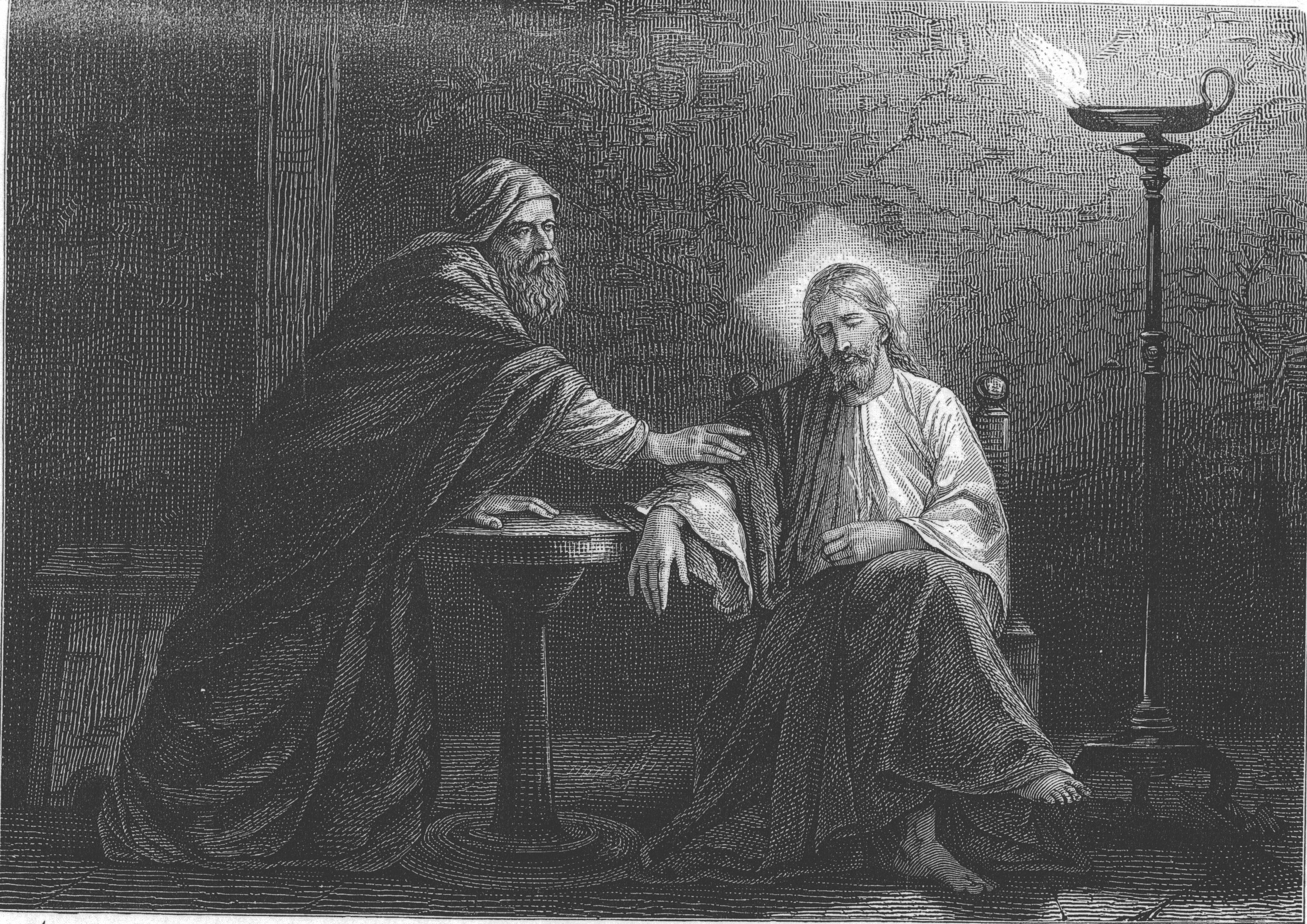
    This Sunday you and I will hear about a wise Jewish leader named Nicodemus whose religion had become such a big part of his life that he was in danger of leaving God out of the picture.

    Thankfully he reached out to Jesus and was reawakened to the reality of God.


    And this is our Lenten challenge as well: to renew our relationship not with the church or religion, but with God. How can we draw closer to God during this holy season? After all, this is the most attractive part, not only of our faith, but of ourselves. Sure, we may be handsome, witty, well-liked, and well off, but we all know deep down that the most attractive part of us is the Jesus inside of us. What do we need to do to make that a bigger part of us?
  • Join Us in the Desert


    Jesus never went to seminary.
    Jesus never did a church internship.
    Jesus never took a General Ordination Exam.

    Jesus went into the desert.

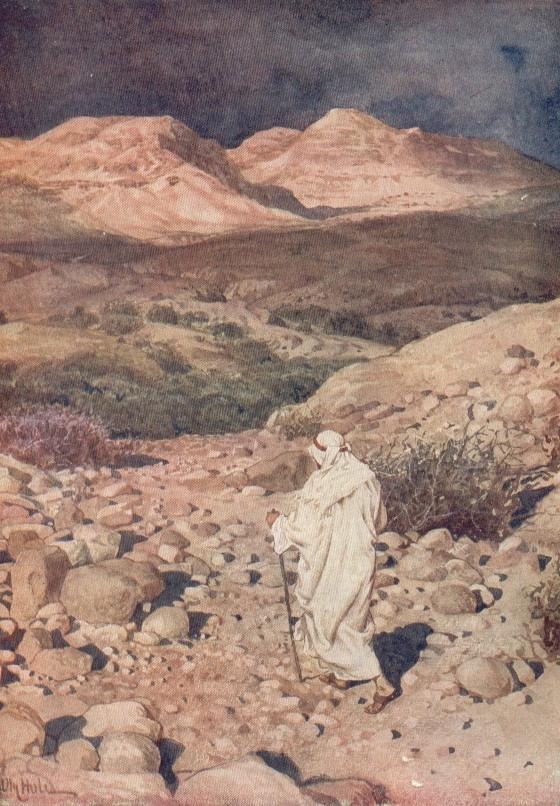
    Immediately following his baptism, Jesus willingly embraced adversity, went off into a secluded place, and wrestled with his demons.

    Then, after 40 days, he emerged, trained and equipped for the work ahead of him.

    Ever thought that God wants us to do the same thing – because doing so, like Jesus, can shape us into the kind of people we’re meant to be - to do the work we're meant to do?

    Lent is the Church’s invitation for us to willingly embrace our adversity, seek a secluded place, and wrestle with our demons - and bask in its ability to change our lives.

    Come with us, into the desert.
  • Get Up and Do Not Be Afraid


    While a teenager driving up north with 3 friends, Mike, the driver, decided to veer off the highway and go off-roading on a sandy, two-track. 

    We were having an absolute ball skidding between pine trees, kicking up sand in the turns, and enjoying a litany of roller coaster hills.
     
    Then, going way too fast up one of those sandy hills, we crested - only to discover a big pine tree right in front of us, too close to avoid and too tall to run over.  Adrenaline gushed, there were gasps and fierce grips as we slammed into the tree. I remember opening my eyes and seeing my friends. Silence gripped us as we all looked out the front windshield to see we’d bowled over and mounted the huge tree. And all we could do was sit there for a very long time.
     
    I don’t remember what broke our silence, but it could have been the same words Jesus used in Sunday’s gospel: ‘Get up and do not be afraid.’
     
    Although Jesus was talking to his disciples who had just witnessed The Transfiguration, these are words for all of us faithful souls who have had life-altering experiences that resist explanation. Maybe it was a car wreck, the death of a child, the loss of a job, or a disastrous business venture. They are life’s ‘what was that all about?’ experiences, and God wants us to know that we never, ever, go through it alone.
     
    We note that Jesus’ words here are not about explanation as much as they’re about invitation. You and I don’t know why the unexplainable occurs but we do know that everything happens for a reason and in the full sunshine of God’s presence. And in the aftermath of many of these instances we can find the words we need to hear to move forward: get up, and do not be afraid.
  • Love Your Enemies


    Like all of Jesus’ commands, the idea that one is to love one’s enemies is not intended to stifle our authentic selves, compromise our humanity, or limit our freedom. Rather, the notion that one can look with love upon those who do not share our conviction is meant to ‘give us life, and life more abundantly.’

    It has been said that the leading cause of mental illness is unforgiveness. My favorite definition is that unforgiveness is like drinking rat poison and waiting for the rat to die. We do well to understand the harmful effects of harboring resentments, including the hatred of our enemies. Mario Puzo said, ‘Never hate your enemies, it affects your judgment.’ Hate can make us into bitter people. It can contribute to no ends to our anxiety and stress. It can take us far off course of our life-quest, ‘to love one another as Christ loves us.’

    After all, you and I were created to love. We find our highest and best fulfillments and pleasures in showing love to others. When we love we touch our deepest selves. Of course it’s counter-cultural – everything that taps into our higher source is – and that’s just it: hating panders to our lower selves. And that is not where deep fulfillment lies.

    Who is our enemy? What will it take to love them? It may start with a pledge not to hate them for 2 hours. It may never get any farther than our hope, one day, to pray for them. But the sooner we decide to go down this road the sooner we will be able to embrace the wholeness Jesus has for us.

    Reading
    Do the Work - Steven Pressfield
    Alexander Hamilton – Ron Chernow

    Switch – Dan and Chip Heath
  • Truth


    My friend got pulled over for speeding. He was doing 88 in a 55.

    While still at the scene he called his lawyer – he was going to fight it. On his day in court his lawyer produced evidence that the police car that tracked my friend’s speed did not have proper air pressure in one of its tires. The speed my friend was driving, then, was deemed inaccurate. The ticket was dismissed.

    The guilty go free – don’t you hate that?

    We hate it because it happens so often. We live in a world where crooked dictators walk and well-heeled drug dealers get off scot free. We’re not happy about this. And neither is God.

    In Sunday’s gospel we hear Jesus call on the carpet the kind of wiggling and wrangling that not only infuriates us, but is so much a part of our modern legal and political worlds. Jesus tells us it’s not enough to obey human laws that can never fully capture the essence of it all, but that we have a higher obligation to truth.

    And it is a truth that you and I are scared of – which is why we are constantly trying to wriggle our way out of it. ‘I don’t deserve a ticket!’ said my friend, ‘I’m a good driver,’ and he really believes it. Do we think this deceit will have a detrimental effect on him – or at least the greater motoring public?  Maybe. Probably.

    Jesus wants you and me to look at the ways we rationalize, diminish, sweep away, and refuse to fully consider the truths around us. God is trying to tell you the truth right now. What is it? How will you find out?

    Jesus doesn’t want to do this to make us feel guilty (we do that rather well on our own), rather Jesus is out to liberate us and make us truly free, giving us a more abundant life, which always begins with honesty and truth.

    So what are the lies we’re living behind? What are we trying to wiggle our way out of? Do we know? Can we trust someone to tell us? Can we pray that dangerous prayer: ‘Lord, show me your truth?’ Do it for yourself, and for those you love.

    ---------------------

    Reading
    Do the Work! – Steven Pressfield
    Matthew for Everyone – NT Wright

    Alexander Hamilton – Ron Chernow
  • Age of Anxiety


    When I was in high school I had no less than a dozen of my friends’ phone numbers memorized. Today I can hardly remember where I parked.

    Yet at 51 my attempt to chalk it up to old age doesn’t quite wash – because I know it’s got nothing to do with my age and everything to do with our age – the age of anxiety.

    You and I live in stressful times. A time of devolution perhaps in which anxiety and worry may be causing us to actually reverse our development. Social scientists tell us our brains are being re-calibrated so that our abilities to listen, pay attention, and thus, think are becoming seriously compromised. Can you remember the last time you spent the afternoon undistracted as you read a book? Count the number of smartphone apps that have to do with list-making and time efficiency, it’s about half. Because when we’re under stress we make lists and we make lists because we aren’t listening and we’re not thinking.

    This has detrimental effects on nearly every aspect of our lives. Businesses go south, relationships fail, each one of us can come up with at least one example of how our exposure to stress and anxiety has damaged our ability to really listen, pay attention, and think about the things that matter most.

    In Sunday’s gospel you and I hear Jesus call us salt and light – a people who enhance and bring illumination to the world by being truly who we are and authentically present in the world. These are graces that God has worked inside of us for which we cannot take credit. We are to be salt and be light – and the only way we can lose our saltiness and illumination is to stop being what we are.  The call of the Gospel is to be who we are.

    In an age of anxiety this becomes a big deal. It means taking the time to think, listen and pay attention – to be – time to understand what that ‘be-ingness’ is all about. It means contemplating our self-image and self-understanding in the light of our faith.

    This also means putting in safeguards to curb distraction. Engaging in intentional practices that keep us focused on the things that matter – prayer, meditation, and Scripture. It means being slow to accept distraction (which is often fueled by the fear that we might be missing something) and instead rest secure that in God we are held, there is no fear, and what we may be missing is not worth the price.

    As we know Jesus, who also lived in anxious times, spent a great deal of his life engaged in the intentional practices I just mentioned. He kept his sanity, deeply loved others, and saved the world.

    Yep, that's how he did it, how about us?


  • Total Pageviews

    Search This Blog

    Blog Archive

    Powered by Blogger.
    ADDRESS

    St. David's Episcopal Church, 16200 W. Twelve Mile Road, Southfield, MI 48076 USA

    EMAIL

    chris@stdavidssf.org

    TELEPHONE

    +011 248-557-5430