Chris Yaw

I am a Christ Lover

Chris Yaw

Welcome! I’m an Episcopal priest serving a congregation in Metro Detroit... With a passion for gun safety... A zest for online Christian formation... A zeal for video blogging... A budding writer... A heart for those who have unintentionally harmed... A commitment to workforce housing... A love for marrying people... And a wonderful wife, three kids, and a cat... If we have common interests or not, I'd love to connect with you.

Me

Contact Details


  • St. David's Episcopal Church, 16200 W. Twelve Mile Road, Southfield, Michigan, 48076, USA


  • +011 248-557-5430


  • chris@stdavidssf.org

St. David's

I have served as rector of St. David's Episcopal Church in Southfield, MI for 16 years, join us Sundays in person or via zoom.

Disarmory Ministries

Working on the issue of unwanted gun disposal, we've made some real progress in helping rid the U.S. of unwanted firearms.

ChurchNext

Since 2013 we have been helping people learn more about faith through our online learning courses at ChurchNext.

Oakland Housing

Helping middle income families get better housing is a challenge that Oakland Housing has been addressing for 75 years.

Hyacinth Fellowship

Because hurting others hurts us, the Hyacinth Fellowship organizes support groups and reminds us that we are not our worst mistakes.

Yaw Wedding

I have been officiating for more than 20 years and continue to find joy in helping couples build lifelong relationships.

0
U.S. Guns Produced Today
0
Americans Accidentally Killed Today
0
Homeless Americans
0
Weddings Performed
  • The Anosognosia of Racism


    I have a friend who suffers from a rare nerve disease that causes him to act quite peculiar in public.

    He incessantly fidgets. He constantly twitches. He can’t get comfortable in a chair. Yes, it is life-shortening and those who know and love him have studied up on the disease, taken classes, and continually come around his wife and family. What makes matters worse is that my friend won’t admit there’s anything wrong with him. He’s convinced that his is a borderline case, and he’s on the other side of the border.  Doctors have diagnosed him with anosognosia – or a lack of awareness of one’s own condition. While his nerve disease may be uncommon, anosognosia is not – at least the idea of it.

    Ferguson, Missouri has lifted a veil to reveal the anosognosia of racism in America – a lack of awareness of our own condition.

    We can no longer feign its existence much less its enormity. Too many for too long have found contentment in the misguided notion that racial inequalities faded with the Civil Rights era, that a new generation would harbor new attitudes, and that a system upheld by laws would change once the laws did.

    But Ferguson has forced us to see that none of this is true. The fact is that too many people are not familiar, nor sympathetic to the plight of blacks and other racial minorities in this country. Too many people take the quick road of condemnation and judgment over the slow road of conversation, understanding, compassion, and bridge-building. Too many Christians buy into the worldly philosophy of Ben Franklin – God helps those who help themselves – instead of the Gospel mandate – God helps those who need help.

    And Ferguson has revealed that we all need help. I have never met anyone who admits they are a racist. Yet Ferguson has shown us how deep racism runs – which makes us wonder if no one is racist, how can there be racism?

    This first Sunday of Advent we will hear St. Mark’s timely reminder to ‘stay alert’ to the things that are happening around us.  This means the things being stirred up in Ferguson. For we must assume that God wants to stir up something in each one of us as well.  This is a hinge moment of reflection on a problem for which everyone will admit exists but few will take responsibility.

    To help us do this, the Episcopal Church, years ago, published a short document I have found helpful in getting my mind around this issue – I urge you to read it and reflect upon it. We’ll have copies of it available Sunday and you can read and download it yourself here:


    http://www.dioceselongisland.org/cmsAdmin/uploads/awakening_pastoralletter.pdf

    So, let us ‘stay alert and’ do our part - to prepare the way for the coming King.
  • Balancing Act


    If the Christian life is a balancing act, is Jesus trying to steady us or tip us over?

    He’s trying to do both.

    Steady us because the storms are bad and frequent. Topple us over because there’s no way to grow without disruption.

    And he is trying to do both of these at the same time – bumping us into discomfort zones – then gently pulling us back in due time.

    Both are done out of love. Both are part of a bigger plan.

    The life of faith calls us to make peace with this – and to ask these questions: What is our discomfort today? How are we being pushed off balance? What are we learning in that space? And how is God pulling us back?

    Answering these questions not only helps us make sense of the randomness of life,
    but it helps us see that we’re never alone on the wire – we walk with another who catches and tips - because that’s what love does.

    ----------
    Reading
    Luke – Morna Hooker
    Fail – JR Briggs
    Church Marketing 101 – Richard Reising
    Alexander Hamilton – Ron Chernow
  • Permission Slip


    Who said you couldn’t do it?
    You weren’t smart enough, cool enough, talented enough?
    Probably voices that we either shouldn’t be listening to or we’re giving way too much credence.

    Following Jesus is a permission slip.
    It’s authorization to grab hold of the one and only life we’ll ever know.
    Not letting this day, hour, or moment slip by without some awareness that we are the one person no one else can be.

    It’s permission to go out and be someone.
    Be someone who is unabashedly authentic.
    Be someone who dances with fear - without denial or retreat.
    Be someone who understands that God not only walks with us, but magically works through us.

    Sunday’s gospel is a trumpet in a phone booth.
    It’s announcing divine authorization to take a charge at life, to seize it, celebrate it, conquer it – to understand that we’ve got the permission to be that person.
    Out with the malaise. Pitch the lackluster enthusiasm. Get off the couch. Take a run for the stars.


    What’s that mean? Identifying our talents is easier than listing the things that keep us from developing them. What are the roadblocks that are keeping you and me from taking the risks before us? What are the hard things we’re avoiding? BTW – don’t view this as condemnation. Dump the guilt - it’s another roadblock. Don’t worry about forgiveness when you’ve got permission.


    Reading
    Being Christian - Rowan Williams
    Church Marketing 101 - Richard Reising
    Fail - J.R. Briggs 
  • Staying Awake


    It’s been noted that one of the great tragedies regarding the way people have understood the Bible is that what they’ve seen done in the Bible must have been right ‘because it’s in the Bible.’ (Rowan Williams)

    We’ve used this to justify all sorts of dastardly behavior from slavery to war and prejudice against gays, women, and minorities.

    But perhaps a more helpful way to understand the Bible is as a collection of the various ways people have responded to God. It tells us how people in different cultures and different ages have tried to love, serve, worship and honor God - some we may judge as rather successful, others as having totally missed the mark.

    In other words, when we read about Old Testament battles in which God condones genocide, this may be best understood as one way these ancient Israelites saw to interact and even honor God and not as tacit approval of this abhorrence.

    So a helpful way to approach Scripture is to ask ‘what does God want me to learn from the way others have interacted with him?’  Or, ‘what is God telling me through this?’

    This becomes helpful as we approach this weekend’s Gospel – in St. Matthew - a familiar but rather odd tale about 10 bridesmaids. It’s because there are obvious cultural and societal issues in this first century Jewish tale – though it has an apparent punch line: ‘Keep awake!’

    This had clear application in Matthew’s context as a persecuted minority on the lookout for those out to harm Christians. But perhaps even moreso today, as you and I live through what may be the most distracting and exhausting age ever – Matthew’s advice to keep awake to the things that are important, alive to the things that matter, and aware of what Christ is up to in the world – has never been more appropriate.

    What do we suppose was Matthew to keep awake to – and what are we to keeping awake to?

    -------------------
    Reading
    Being Christian – Rowan Williams
    Fail – JR Briggs

    Simplify – Bill Hybels
  • How to Act Like a Saint


    A friend of mine is watching his wife die.

    She’s in her 50’s, spouse, mother, highly respected, beloved and in the last stages of cancer. While raised in religious homes neither of them have the gift of faith, both are going through this time, to use their words, ‘without God.’  This is to say, they find no comfort in the idea of God nor inclination to investigate it.  So they have given little thought to the presence of the divine or any possible way in which ‘God’ might help.

    Maybe you know people like this.

    I know many. And that’s why it’s really important to understand faith as a gift. Scripture alludes to this (Eph. 2:8) and Christians are at their best when we understand that the gift we have – of the knowledge of God’s presence and action in the world – is given to us not to flaunt or boast about, but to use to better our lives and those around us.

    Christians have a long and scary history of judging those who do not have this gift – as if to say, ‘I inherited my uncle’s estate and you didn’t – na, na, na, na, na!’ After all, that’s what we did. We didn’t earn this warmth in our hearts, peace in our souls, or understanding of a framework of love upon which to build our lives. This was all gift, gift, gift.

    So when we encounter those who tell us they are ‘without God’ our first response must be to cast all judgment aside – after all, ‘without God’ is where we are too, save the gift we’ve been given. Our best response is to come alongside those who are hurting, remembering that this is why God gave us the gift in the first place.

    All Saints’ Sunday asks us to remember this gift and the many ways it has been made manifest in those who have gone before us. It is to praise God for God’s generosity. However, it is also for the grace God has in dealing with those who have not received this gift – those whom God created and loves but who might call themselves ‘far from God.’  As we know, judgment is not in our job description, compassion, grace, and love are. So in this holy season, who around us could use love, compassion, and a helping hand through adversity and trial? How do we use God’s gift to us of sainthood for the well-being of others? How do we act like a saint and love others as Christ has loved us?

    ----------------------
    Reading
    Simplify - Bill Hybels
    Fail - JR Briggs
    Exploring Our Hebraic Heritage - Marvin Wilson
  • "I am not a Bible person!"


    ‘I am not a Bible person!’ exclaimed the elegant and sophisticated woman sitting across the table from me during Coffee Hour, ‘I am an Episcopalian.’

    Those around her laughed, not because of her accuracy, but her intention.

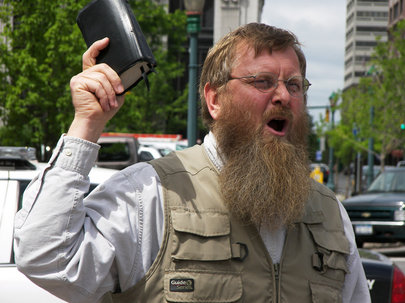
    After all, the moniker ‘Bible person’ conjures up images of ill-educated, over-bearing and angry street preachers looking to harass and condemn. We think just because the ‘Bible person’ is louder – and can quote chapter and verse – they know the Bible better than the rest of us. That’s rarely the case. After all, whenever someone says, ‘The Bible says…’ they’re really saying, ‘My reading of the Bible says…’

    The truth is if you’re an Episcopalian you are a Bible person.  First, it was from this tradition that the Bible was translated and promoted in English in the first place – including the invention of chapter and verse. Second, it was this tradition that published the most popular and influential version of the Bible in the world - the King James Version. And third, every Sunday morning, the average Episcopalian hears more of the Bible, and from more varied places in the Bible, than a very large number of the ‘bible’ churches out there.

    Go ahead and keep your image of ‘Bible person’ – but please, please don’t shortchange what that means. At the heart of the Anglican/Episcopal tradition is a soul that yearns to have God’s words define us – to be inside us, on our hearts and in our minds – so that we might become more fully who we are and who we’re meant to be. You may not know chapter and verse, but you know more of the Bible than you think.

    ------------------
    Reading
    Fail – J.R. Briggs
    Exploring Our Hebraic Heritage – Marvin Wilson
    The Bible

  • Traps


    Ever been caught in one of these traps?

    A loveless marriage?
    A body that just won't cooperate?
    A dead-end job?
    A dysfunctional family?
    An addictive behavior?
    An undesirable economic situation?
    An unhealthy habit?
    A boring and dreary life?

    Sometimes that trap is so strong it’s all we can see. The walls close in. We feel bound, limited, constrained and depressed.

    Jesus knows all about traps. He spent much of his earthly life avoiding them. And even when he was caught, it was only for 3 days. I suspect Jesus was unable to be trapped because 1) he knew that any earthly trap was temporary, 2) he was content with what he had, and 3) he looked to God at all times.

    What is the trap you’re in?

    Can we begin to understand that it’s only temporary, that we can find some sort of peace in it, and can we look to God to bring us through it? Every trap offers the opportunity to be transformed. God doesn’t set traps, but God uses them to transform us more fully into the image and likeness of Jesus.
  • Why I Don't Smoke Pot


    My friend called the other day all freaked out and said,‘I found pot in my teenager’s bedroom! What do I do? When I confronted him he said everyone’s doing it!’

    And this 16-year-old has a good point. Marijuana use is rampant in schools, prisons, parties, and clubs. It is so prevalent that it’s being legalized all over the place. Kids will always be trying it (that’s what kids do). And adults will have one less hurdle in the way if they choose to make pot smoking a bigger part of their lives.

    I probably won’t.

    Like you, I understand the brevity of life. I understand the complexity of life. I understand the increasingly fast pace of life. And I understand how vitally important it is to go through life aware - as aware as I can be, and as alert and present as possible.

    This means understanding, the best I can, who I am and my current place in the world. It means knowing my history and pondering my future. Knowing who we are, how we got here and having some idea of where we’re going is really important if we desire to live lives of purposeful dedication to Christ.

    This doesn't mean we can never party, but it does remind us that there are some really serious matters around us that need tending to. 

    Ebola needs a cure. ISIS needs to be stopped. Congress needs a clue.

    Closer to home, there’s someone who needs a hug right now. They would really like it if we called them, texted them, or emailed them. There are things we should be saying to them, ‘I love you,’ ‘Can I help you with that?’ ‘How can I make your burden lighter?’

    Sunday’s gospel hints at this and challenges you and me to do the difficult work of awareness - cherishing every opportunity, every moment, every interaction, every person who comes across our path.

    So how are we doing with this? To whom do we need to reach out? What fog do we need to forge through? How can we push through the resistance to do this sometimes awkward work of awareness?
     -----------------

    Reading
    Exploring Our Hebraic Heritage – Marvin Wilson
    Being Christian – Rowan Williams
    Your Living Compass – Scott Stoner
  • Using Technology to Pray


    Too busy to Pray?
     
    If you're like me you're too busy not to pray... And you crave an intimacy with God that will help you connect with your place in the world to love and serve God and those around you.

    That means finding ways to incorporate regular prayer into our increasingly busy lives. For me, that means getting the Prayer Book where I'm most likely to use it - on my smartphone.

    Here are three suggestions. 

    The first is the one I use - it's a free app on my smartphone - available at the iPhone Apple store and in the Android Google Play store - just search for Mission of St. Clare. When you download it to your smartphone the icon will look like the one in the photo above.

    This will give you an app that conveniently organizes Morning and Evening prayer - when you click on it it will automatically take you to the prayer time that is appropriate for that date and time. It's awesome and I can't recommend it enough.

    If you want to do the same on your computer - to pull up the offices on your desktop PC or laptop - simply go to St. Clare's website:

    www.missionstclare.com

    I know lots of people who do it this way and their prayer lives have been deeply enriched.

    And, of course, if you want to do it the old-fashioned way, use The Book of Common Prayer and look up these offices, bring along a Bible, and follow along as best you can. There's a shorter version on page 136.  If you're new to the Prayer Book you'll likely find this option much more clumsy and even frustrating as the bevy of options can interfere with the experience.

    Sure new technology is scary - and we're often quick to dismiss learning something new - but in using technology this way I have found it much easier to connect with God and nurturing to my faith. Let me know what you think.
  • Where's Your Spot?

    Whenever I bought a house – and I’ve purchased several over the course of my 52 years – my mother would always ask me: where’s your favorite spot? She was referring to that 6’ x 6’ space to which I most found myself returning. Sometimes it was a favorite chair next to the fireplace, a couch that overlooked the back yard, or a pile of pillows in a bay window that was perfect for an afternoon nap.

    This fall your church has one simple question and one simple challenge for you: where’s your spot? Only what we mean by this is where is your favorite 6’ x 6’ spot to spend 15 minutes a day with God?

    What are we going to do for 15 minutes? Read the Bible. Read the Prayer Book. Sit in silent meditation. You be the judge. But we all suspect that the one, and perhaps, only investment that we can make that can have a consistently positive impact on our lives is spending time with God – intentionally stepping out of the daily grind, and studying about and listening to God.  We know this makes us better people, our families better families, and our congregation a better congregation.

    Where’s your spot? How are you going to carve out time to get there for 15 minutes a day? What are you going to do for that 15 minutes? We will have suggestions throughout the fall as we move into our series, ‘Back to the Prayer Book’ in which we will be studying various aspects of the Prayer Book that can help us draw closer to God.

    So, where’s your spot?
  • What Are We Holding Onto?


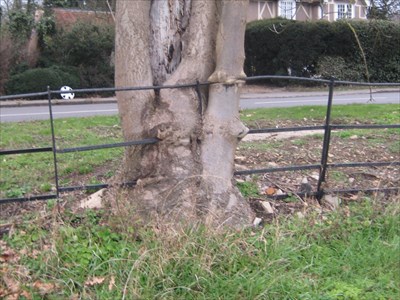
    On my running route there’s a tree that’s a bit younger than the fence that runs next to it. Over time, the tree has actually grown into the fence. I imagine it started with the tree leaning on the fence. And over time the tree started to become part of the fence so that today they’re hopelessly intertwined.

    The things we lean on often become a part of us.

    This is good and not so good. The occasional drink becomes a drinking problem. The scandal-talking friend we occasionally chat with can turn us into gossips. Undue rumination over an untruth – like we’re unworthy, insignificant, and unforgiven, can turn us into scared and scarred people.

    Sunday’s Collect takes us in a different direction by challenging us to lean on, and hold onto those things that are heavenly: ‘Grant us, Lord, not to be anxious about earthly things, but to love things heavenly to hold fast to those things that shall endure’
    Can we hold onto the words of heaven that tell us: Don’t worry. It’ll be OK. It’s under control. Relax. Holding onto these truths eventually becomes a part of us and makes us more into the people we are called – and want – to be.

    What are you holding onto? What do you need to let go of?  May God grant us the strength to hold on and let go of the right things.
  • Jesus and Karma


    When I was a kid we called it, ‘what goes around, comes around.’  These days they call it ‘Karma’ – the idea that your kindness or unkindness will find a way back to you. But a far more ancient idea is that which Jesus put forward when he said, ‘Whatever you bind on earth will be bound in heaven, whatever you loose on earth will be loosed in heaven.’

    Sure, it sounds rather cryptic – like a lot of stuff he talked about – but the idea is the same: those things that we bind up here on earth – like anger, unforgiveness, suffering, discrimination, injustice, and sickness – those will be bound, powerless, even absent in our eternities.

    On the flip side, those things we let loose here on earth, like love, compassion, peacefulness, kindness, forgiveness, joy, patience, and goodness – those will populate our eternities and we will enjoy them forever.

    Friends, this is our one shot at falling in love with doing good - serving people, creating value, solving problems, building important relationships, and doing work that really matters.

    If heaven is what you make it, then let’s make it one worth going to.
  • Total Pageviews

    Search This Blog

    Blog Archive

    Powered by Blogger.
    ADDRESS

    St. David's Episcopal Church, 16200 W. Twelve Mile Road, Southfield, MI 48076 USA

    EMAIL

    chris@stdavidssf.org

    TELEPHONE

    +011 248-557-5430