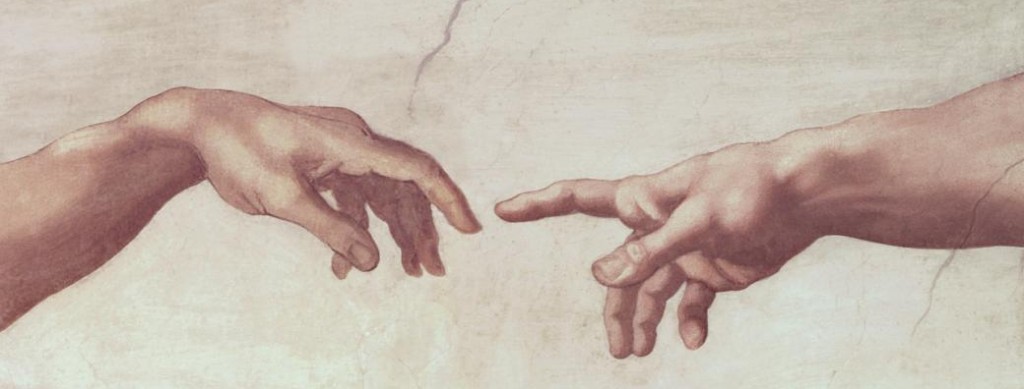
Because you and I were created to love, we have a deep
yearning for examples, for icons, for models and paradigms that can help us
live more fully into our true selves – into love.
In the midst of our self-centeredness, hurriedness, anger (and
frustration over our anger), we long for a way out. Deep down we want to be the
people we know we can be – the people we were created to be – people of love.
This is why Jesus endures. This is why Christianity endures.
This is why the Church endures. We are constantly seeking an out from the
violence, poverty, and degradation, of which we are victims and perpetrators. This
is why we look to the image nonpareil of a man who was able to live fully
grounded, infused, and enveloped, in love. This was our motive for getting baptized, confirmed, and
belonging to a faith community. We yearn deeply for love to dominate our lives.
This is why we look to Jesus with the notion, ‘How might I
be likewise? What might I do? How might I behave?’ And we see in Mark 10 we
discover a secret: living a life of service.
Let’s face it, the pharaohs, emperors, kings, presidents,
and industrialists of the ages have only spray painted their initials on the
statues of Jesus, Mother Teresa, Martin Luther King, Jr. and the pantheon of
those who did not set out to rule, reign, or enrich themselves – but to serve.
Deep down we know that making service the telos of our
existence is our only shelter from the storm. Bill Gates, Warren Buffett, and
any other ‘successful’ person of power who has discovered that real life is
found not in acquiring but in dispensing, ultimately grounds their deepest
worth not in what they brought in, but how they gave back.
A life of service does not start tomorrow. It starts today.
Look around. Where’s the need? Who’s hurting? Who needs you? If the Son of Man
came not to be served, but to serve, how can we do likewise? Our lives are our
message to the world. Let’s make them inspiring.
If you’ve seen the movie American
Sniper, or if you’ve read any books on the rigorous training that Navy
Seals endure, then you know that becoming one of the world’s most elite soldiers
is no walk in the park.
Navy Seal recruits are not only subject to torturous
physical training, sleep deprivation, and exhaustion, but psychological strain
that leaves them frustrated, angry, and confused. At the height of their training they routinely ask what this
preparation has to do with winning battles and how near-hypothermia and peer
humiliation will make them better soldiers. This is why most recruits quit.
The U.S. armed forces purposely put their most valuable and
talented recruits in scary, uncomfortable places that leave them lonely and
confused. This produces the best soldiers.
God does the same thing.
The call to discipleship is not primarily about happiness,
comfort, or self-actualization. It’s about understanding that God has called
the Church to do something at least as important as guarding borders and
attacking enemies. Discipleship is
about continued self-sacrifice and denial aimed at improving the lot of the
poor, hungry, and suffering. It is about witnessing to hope in a hopeless
world. It is about cultivating peace in the midst of chaos.
So are you like me – questioning why God allowed something
to happen that has been painful, confusing, and frustrating? Maybe it’s a
business deal that went south, a relationship that never materialized, a health
problem that seemed so senseless, the untimely death of a loved one?
Take heart. Your suffering does not go unnoticed. In some
way, Jesus is with us. He knows our pain and frustration. And just because he
doesn’t take it away doesn’t mean he doesn’t love us. It means that he’s using
it in ways we will never understand to do things we can’t conceive. Take heart
and be of good hope, my friends, today’s present sufferings are the stuff of
redemption.
My five-year-old has a hearing problem.
Actually, he has a listening problem. There he sits, on the
counter, so totally absorbed with eating, playing, watching a video, or talking
to himself that I have to ask him two or three times if he wants more milk, to read
a book, or to help clean up. He’s not deaf. But he’s deaf.
This Sunday you and I will hear a story about Jesus healing
a deaf man. While it’s a literal healing of a medically diagnosable condition,
it is also a metaphorical statement regarding our own human state: there are a
whole lot of things that plug up our ears and keep us from hearing.
In my son’s case it’s the obsession of exploring a brand new
world (remember, he’s five). But for you and me what makes us deaf usually
revolves around the three A’s: achievement, acquisition, and appearance. Read
that again.
While we were created to achieve, acquire, and look good,
our society’s obsession with them routinely spills over and can become our fixation
as well. Thoughts and strategies around achievement, acquisition, and
appearance routinely clog up our ears and keep us from hearing the things of
God.
Jesus’ healing, then, has to do with unplugging our ears –
helping us put into perspective who we are and what we’re called to do.
Jesus does this by calling us to himself – often through
prayer, quiet times of meditation, and pondering on the words of scripture. It’s
reminding myself of who I am, who God is and what really matters. This unplugs
my ears what works for you?
Living in the richest country that’s ever existed, along
with its relative safety, abundance in food, clothing, and shelter, not to
mention opportunity, it may be hard to imagine that a whole lot of Americans suffer
from an anxious soul condition of wanting just a little bit more. We set goals
and ambitions that produce nervous hearts and we crave what we don’t have and
are thus less than happy with what we do have.
Pharmacies are filled with elixirs to calm us down and
psychiatrists are booked with appointments to help us cope. And the irony is
that deep down we know the answer is not getting more of what we don’t have,
but finding contentment in what we do have.
On Sunday we will hear the familiar story of Jesus sending
out 12 disciples to continue Jesus’ work. He will tell them to pack lightly. He
will strip them down to the essentials - then give them even less. What he will
give them is what they need. He will give them all of him. For they will travel
with the Spirit who is watching their every step, providing food, shelter, and
every necessity that appears.
It is in this radical asceticism that we discover anew that
we already possess all we need to make ourselves happy. For happiness does not
come from acquisition, but awareness. It is an awareness of God’s deep love and
provision for us. It is an understanding that nothing happens to us outside of
God’s providence. It is a deep knowledge that we are loved and worth loving. It
is gratitude.
When God is not enough to satisfy our desires, it’s a good
time for us to ask questions about our desires; what is it about that new home,
car, outfit or even the longing for our loved ones to meet our approval, that
must be acquired in order to complete us? Are we going too far in seeking
cultural, familial, and self-approval for the goals we set and the people we
aspire to be?
The most important gift many of us can give ourselves is
gratitude. What might we do to make this the telos of our life’s trajectory?
Can we imagine that the attainment of a grateful heart might hold the key to
the contentment we seek? What steps can we take today to make gratefulness a
deeper part of our lives?
After 64 years in the same house, it was time for Jack the
Hoarder to move.
But Jack did not want to go. Even though his children,
neighbors, and Social Services had visited the home repeatedly, to urge Jack to
leave behind the mounds of newspapers, rotting food, Styrofoam containers, and
other assorted clutter. “This is my happy home, since 1950,” he would tell
them, “Why must you torment me?”
Those with Jack’s best interests at heart were certainly not out
to torment him. And eventually they won, and he left. Jack went to a
brand new assisted living apartment where, remarkably, 6 months later he was
happy as a clam, “They make meals for me, change my sheets, and I don’t even have
to go shopping,” he told his niece. What we may think of as hurt often turns
into the healing we never knew we needed.
This Sunday we’ll hear a familiar story about a mentally ill man
who urged Jesus to go away – not to heal him, ‘Do not torment me,’ he
exclaimed. But Jesus was not out to hurt; he was out to help. And by the end of
the story we find that Jesus knew better, and the man became well.
You and I frequently do things like this. We look at life’s torments as malicious. We look at those who criticize us as way off base and we rationalize. Yes, we see the bankruptcy, the illness, the bad review, the dashed relationships as torturous episodes we fight tooth and nail to avoid. We forget that God is the benevolent force of love who is working hard at every turn to not only make us our best selves, but to bring about changes in the world for the better.
What seems like criticism and pain is often a passageway to
becoming a better version of ourselves. So let’s not shun the tough decisions,
hard words, and cutting advice. Hurt often turns into healing.
When the pink slip comes, the spouse announces an exit, the
kids get slammed with an illness that we can’t do anything about – our first
reaction, conscious or unconscious, is often anger against the Almighty. It may
drive us away from prayer, from church, from God. Most of us have been there.
As time passes we might stay in that dark, distant place. Or
we might soften. We might begin to see that God is not the one causing these
things - that these things just happen – and that our anger against God is not
helpful.
This Sunday we will hear a familiar story about Jesus
sleeping in a boat when a storm comes along. We will hear the passengers’ first
reaction as one of anger, as they awaken him with the words, ‘Don’t you care
God?’ Jesus’ reaction is to calm the storm – and then to remind these onlookers
that God not only cares, but comes to the rescue.
For whatever reason the way God rescues us is usually very
different than the way we envision being rescued. How has that been true for
you? When things bigger than ourselves hit us our knee jerk reaction is to
blame. However, we’re better off when our blame is aimed in the right
direction.
Friends, God is on our side. Pause when tempted to blame. Sit
tight. Avoid the hasty reaction – for we know in our hearts that we weren’t
created to be tormented. Take heart, stand firm, carry on – we all want to
avoid taking a swipe at the hand extended to help.
--------------------
Reading
All the Light We Cannot See - Anthony Doerr
Mark - Morna Hoker
--------------------
Reading
All the Light We Cannot See - Anthony Doerr
Mark - Morna Hoker
Imagine being one of the 12 disciples who agreed to follow
Jesus.
“He was probably impressed with my organizational skills,” thought
Andrew the fisherman. “No doubt he
needed some accounting help,” surmised Matthew the former tax collector. “I’m
sure he wanted to tap into my managerial expertise,” thought Peter, the former
small business owner.
We may think that God calls us because he is interested in
the skill set we’ve honed – that God is in need of certain abilities and we
bring them to the table – orator, writer, teacher, etc. – and so God calls us
because of what we have on offer.
However, were that the case, Jesus would’ve gone to 100
other places of commerce, business schools, and centers of power before he
would have plucked up a dozen subsistence-level laborers and miscreants to form
his inner circle. It is clear that:
We are not chosen for what we see in us, we are chosen for
what God sees in us.
God is up to something big and when we sign on to
participate we lose the right to tell God what to do (as if that ever got us
very far anyway…).
God chooses us because God sees in us things we don’t. We
often fail to access our skills, and the skills of others properly - routinely
underestimating our abilities and over-estimating the abilities of others. Even
the things we’re best at are not void of epic fails and head-hanging regrets.
Accepting the call of Christ, then, is not about commending
God for his great taste, it’s more about opening ourselves up to a wider vision
- understanding that there is order, reason, purpose, and incredible value in
who we are and what we do.
And while we may be tempted to live as if everything was
random, nothing mattered, and that life would be perfect if only I could reach
my goals, it’s as if God is saying, ‘It all matters. It’s all important –
because I have goals more vast and beautiful than you’ll ever know. Trust in
me. Aim higher. Know that you’re watched and cared for. Don’t be afraid of
mistakes.‘
Ever wondered why God would be interested in you?
Of course, you’re smart, witty, and well known for
dependable companionship at cocktail parties – but God is not simply interested
in you as a friend. God is interested in you as someone much more – business
partner, co-pilot, disciple is the Bible word.
“But I’m such a _______” Now fill in the blank with a litany
of adjectives on why you are incapable, ill-suited, and otherwise a really bad
choice for this role. And when you do this you will join the legions of Moses’,
King Davids’, St. Peters', and essentially every other human being who has ever signed up
for this
The point is that you’ve been called to follow because of
something God sees in you. Most of the time you will not see this. In fact, you will argue against it. “Why not choose someone more pious, more devoted, or who
can at least find John 3:16?” But God doesn’t work that way. God does not call
the equipped, God equips the called.
So go ahead and get over yourself. Quit complaining about
what a bad judge of character God is. And let’s get on
with the work we’re called to do. God is interested in you – much more than you’ll
ever know.
Reading
All the Light We Cannot See – Anthony Doerr
The Juvenilization of American Religion – Thomas Bergler
Alexander Hamilton – Ron Chernow
Jesus didn’t have a white board.
He didn’t have a smart phone.
He didn’t carry a calendar.
At New Year’s, our pinnacle time of resolutions, new leafs,
goal-setting, and high-hoping we can’t help but be reminded that Jesus was
never described as one for whom planning was a huge priority. Jesus wasn’t
known as a plotter. He wasn’t a schemer nor did he seem to hold marathon
strategy sessions. In fact, the
most extended time of preparation we find him engaging in was in the Garden of
Gethsemane when he pulled an all-nighter… praying.
For Jesus, to plan was to pray.
It was to put aside his program in order to ask and accept
God’s program.
Most of the people I know spend more time planning than
praying. Maybe it’s our insecurity
– our need to feel more in control. Maybe it’s laziness Maybe it’s because we
might be scared of what we’ll hear.
This New Year’s I’m hoping to take time to pray. I hope to
lay my calendar before God’s feet and ask him to fill it in.
What would more praying and less planning look like for you?
If an angel appeared with a message from God just for you - what might it be? Here are some possibilities:
Dream bigger.
Push limits.
Press on.
Let go.
Relax.
It’s going to be alright.
Forgive yourself.
Don’t demand perfection.
Dance with your fear.
Think about the poor.
Obsess over others.
Ask yourself how well you’re living.
Don’t wait for an angel to hear from God. Listen to your heart. God’s got a message there.
--------
Reading
Pistis Sophia - GRS Mead
Mark - Morna Hooker
Sermons - Peter Gomes
--------
Reading
Pistis Sophia - GRS Mead
Mark - Morna Hooker
Sermons - Peter Gomes
When the dictionary defines wilderness as an, ‘inhospitable, uncivilized, and uncultivated region’ I can’t help but think about life in the 21st century. Inhospitable in the way we routinely lock doors and view strangers with suspicion. Uncivilized regarding the ways capital punishment, genocide, aggression, and violence are condoned. And uncultivated in the way all ranks of immaturity in entertainment, economics, and morality are promulgated.
So when John the Baptist declares his identity as, ‘the voice of one crying out in the wilderness,’ I can relate – I’m crying out in this wilderness too.
And my cry is like yours - we long for a world that’s more
hospitable, civil, and that lovingly cultivates the gifts that surround us. We
sorely desire a safer, more welcoming, more peaceful world that celebrates the
diversity of our gifts and supports the creativity with which we’ve been
blessed.
Call us out of that wilderness, O Lord. Take us to that
place of hospitality, civility, and maturity. Help us figure out what’s gotten between
your voice and our ear. Re-instill a holy longing. Stir up our Spirits. And
don’t just call us out of the wilderness help us transform it, so that everyone
else who’s stuck in here with us might see what you’re really up to.
The road to riches begins when we want something we don’t
have. If we stay focused and work hard we find we get it. But sooner or later
our happiness wanes because we quickly become accustomed to what we’ve just
acquired. Eventually we become bored so we seek something new to get or to do. Once
more, we stay focused and work hard, and find it’s ours. Soon after, the
boredom returns and the quest is renewed.
We do this again and again.
Making matters worse, we can find it harder to slow down and
enjoy what we have because we’ve become too busy running after the next thing
even though we will admit that we have more possessions and experiences than a
lifetime of savoring can do justice to. This is how wealth becomes poverty. And
yes, everybody does it.
The way to get rich and stay rich, then, is not about
endless acquisition but regular savoring. Taking delight in the things we have,
counting our blessings, appreciating, and taking real pleasure in the good
fortune we’ve enjoyed – that’s where true wealth is found.
Which brings us to Advent.
This is the season that invites us to do this - to regular
contemplation of the beauty and wealth that surrounds us. So take a moment.
Breathe deep. Think of one thing in your life that absolutely delights you –
not something you want, but something you already have. Sooner or later we
discover how rich we already are.
-----------
Reading
The One Thing – Gary Keller
Alexander Hamilton – Ron Chernow
Mark – Morna Hooker
Mark – Morna Hooker