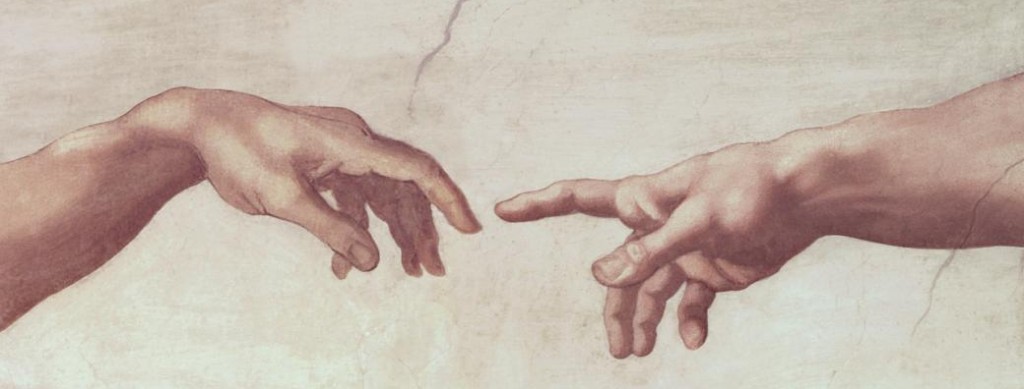
You and I frequently do things like this. We look at life’s torments as malicious. We look at those who criticize us as way off base and we rationalize. Yes, we see the bankruptcy, the illness, the bad review, the dashed relationships as torturous episodes we fight tooth and nail to avoid. We forget that God is the benevolent force of love who is working hard at every turn to not only make us our best selves, but to bring about changes in the world for the better.
After 64 years in the same house, it was time for Jack the
Hoarder to move.
But Jack did not want to go. Even though his children,
neighbors, and Social Services had visited the home repeatedly, to urge Jack to
leave behind the mounds of newspapers, rotting food, Styrofoam containers, and
other assorted clutter. “This is my happy home, since 1950,” he would tell
them, “Why must you torment me?”
Those with Jack’s best interests at heart were certainly not out
to torment him. And eventually they won, and he left. Jack went to a
brand new assisted living apartment where, remarkably, 6 months later he was
happy as a clam, “They make meals for me, change my sheets, and I don’t even have
to go shopping,” he told his niece. What we may think of as hurt often turns
into the healing we never knew we needed.
This Sunday we’ll hear a familiar story about a mentally ill man
who urged Jesus to go away – not to heal him, ‘Do not torment me,’ he
exclaimed. But Jesus was not out to hurt; he was out to help. And by the end of
the story we find that Jesus knew better, and the man became well.
You and I frequently do things like this. We look at life’s torments as malicious. We look at those who criticize us as way off base and we rationalize. Yes, we see the bankruptcy, the illness, the bad review, the dashed relationships as torturous episodes we fight tooth and nail to avoid. We forget that God is the benevolent force of love who is working hard at every turn to not only make us our best selves, but to bring about changes in the world for the better.
What seems like criticism and pain is often a passageway to
becoming a better version of ourselves. So let’s not shun the tough decisions,
hard words, and cutting advice. Hurt often turns into healing.
When the pink slip comes, the spouse announces an exit, the
kids get slammed with an illness that we can’t do anything about – our first
reaction, conscious or unconscious, is often anger against the Almighty. It may
drive us away from prayer, from church, from God. Most of us have been there.
As time passes we might stay in that dark, distant place. Or
we might soften. We might begin to see that God is not the one causing these
things - that these things just happen – and that our anger against God is not
helpful.
This Sunday we will hear a familiar story about Jesus
sleeping in a boat when a storm comes along. We will hear the passengers’ first
reaction as one of anger, as they awaken him with the words, ‘Don’t you care
God?’ Jesus’ reaction is to calm the storm – and then to remind these onlookers
that God not only cares, but comes to the rescue.
For whatever reason the way God rescues us is usually very
different than the way we envision being rescued. How has that been true for
you? When things bigger than ourselves hit us our knee jerk reaction is to
blame. However, we’re better off when our blame is aimed in the right
direction.
Friends, God is on our side. Pause when tempted to blame. Sit
tight. Avoid the hasty reaction – for we know in our hearts that we weren’t
created to be tormented. Take heart, stand firm, carry on – we all want to
avoid taking a swipe at the hand extended to help.
--------------------
Reading
All the Light We Cannot See - Anthony Doerr
Mark - Morna Hoker
--------------------
Reading
All the Light We Cannot See - Anthony Doerr
Mark - Morna Hoker
Imagine being one of the 12 disciples who agreed to follow
Jesus.
“He was probably impressed with my organizational skills,” thought
Andrew the fisherman. “No doubt he
needed some accounting help,” surmised Matthew the former tax collector. “I’m
sure he wanted to tap into my managerial expertise,” thought Peter, the former
small business owner.
We may think that God calls us because he is interested in
the skill set we’ve honed – that God is in need of certain abilities and we
bring them to the table – orator, writer, teacher, etc. – and so God calls us
because of what we have on offer.
However, were that the case, Jesus would’ve gone to 100
other places of commerce, business schools, and centers of power before he
would have plucked up a dozen subsistence-level laborers and miscreants to form
his inner circle. It is clear that:
We are not chosen for what we see in us, we are chosen for
what God sees in us.
God is up to something big and when we sign on to
participate we lose the right to tell God what to do (as if that ever got us
very far anyway…).
God chooses us because God sees in us things we don’t. We
often fail to access our skills, and the skills of others properly - routinely
underestimating our abilities and over-estimating the abilities of others. Even
the things we’re best at are not void of epic fails and head-hanging regrets.
Accepting the call of Christ, then, is not about commending
God for his great taste, it’s more about opening ourselves up to a wider vision
- understanding that there is order, reason, purpose, and incredible value in
who we are and what we do.
And while we may be tempted to live as if everything was
random, nothing mattered, and that life would be perfect if only I could reach
my goals, it’s as if God is saying, ‘It all matters. It’s all important –
because I have goals more vast and beautiful than you’ll ever know. Trust in
me. Aim higher. Know that you’re watched and cared for. Don’t be afraid of
mistakes.‘
Ever wondered why God would be interested in you?
Of course, you’re smart, witty, and well known for
dependable companionship at cocktail parties – but God is not simply interested
in you as a friend. God is interested in you as someone much more – business
partner, co-pilot, disciple is the Bible word.
“But I’m such a _______” Now fill in the blank with a litany
of adjectives on why you are incapable, ill-suited, and otherwise a really bad
choice for this role. And when you do this you will join the legions of Moses’,
King Davids’, St. Peters', and essentially every other human being who has ever signed up
for this
The point is that you’ve been called to follow because of
something God sees in you. Most of the time you will not see this. In fact, you will argue against it. “Why not choose someone more pious, more devoted, or who
can at least find John 3:16?” But God doesn’t work that way. God does not call
the equipped, God equips the called.
So go ahead and get over yourself. Quit complaining about
what a bad judge of character God is. And let’s get on
with the work we’re called to do. God is interested in you – much more than you’ll
ever know.
Reading
All the Light We Cannot See – Anthony Doerr
The Juvenilization of American Religion – Thomas Bergler
Alexander Hamilton – Ron Chernow
Jesus didn’t have a white board.
He didn’t have a smart phone.
He didn’t carry a calendar.
At New Year’s, our pinnacle time of resolutions, new leafs,
goal-setting, and high-hoping we can’t help but be reminded that Jesus was
never described as one for whom planning was a huge priority. Jesus wasn’t
known as a plotter. He wasn’t a schemer nor did he seem to hold marathon
strategy sessions. In fact, the
most extended time of preparation we find him engaging in was in the Garden of
Gethsemane when he pulled an all-nighter… praying.
For Jesus, to plan was to pray.
It was to put aside his program in order to ask and accept
God’s program.
Most of the people I know spend more time planning than
praying. Maybe it’s our insecurity
– our need to feel more in control. Maybe it’s laziness Maybe it’s because we
might be scared of what we’ll hear.
This New Year’s I’m hoping to take time to pray. I hope to
lay my calendar before God’s feet and ask him to fill it in.
What would more praying and less planning look like for you?
If an angel appeared with a message from God just for you - what might it be? Here are some possibilities:
Dream bigger.
Push limits.
Press on.
Let go.
Relax.
It’s going to be alright.
Forgive yourself.
Don’t demand perfection.
Dance with your fear.
Think about the poor.
Obsess over others.
Ask yourself how well you’re living.
Don’t wait for an angel to hear from God. Listen to your heart. God’s got a message there.
--------
Reading
Pistis Sophia - GRS Mead
Mark - Morna Hooker
Sermons - Peter Gomes
--------
Reading
Pistis Sophia - GRS Mead
Mark - Morna Hooker
Sermons - Peter Gomes
When the dictionary defines wilderness as an, ‘inhospitable, uncivilized, and uncultivated region’ I can’t help but think about life in the 21st century. Inhospitable in the way we routinely lock doors and view strangers with suspicion. Uncivilized regarding the ways capital punishment, genocide, aggression, and violence are condoned. And uncultivated in the way all ranks of immaturity in entertainment, economics, and morality are promulgated.
So when John the Baptist declares his identity as, ‘the voice of one crying out in the wilderness,’ I can relate – I’m crying out in this wilderness too.
And my cry is like yours - we long for a world that’s more
hospitable, civil, and that lovingly cultivates the gifts that surround us. We
sorely desire a safer, more welcoming, more peaceful world that celebrates the
diversity of our gifts and supports the creativity with which we’ve been
blessed.
Call us out of that wilderness, O Lord. Take us to that
place of hospitality, civility, and maturity. Help us figure out what’s gotten between
your voice and our ear. Re-instill a holy longing. Stir up our Spirits. And
don’t just call us out of the wilderness help us transform it, so that everyone
else who’s stuck in here with us might see what you’re really up to.
The road to riches begins when we want something we don’t
have. If we stay focused and work hard we find we get it. But sooner or later
our happiness wanes because we quickly become accustomed to what we’ve just
acquired. Eventually we become bored so we seek something new to get or to do. Once
more, we stay focused and work hard, and find it’s ours. Soon after, the
boredom returns and the quest is renewed.
We do this again and again.
Making matters worse, we can find it harder to slow down and
enjoy what we have because we’ve become too busy running after the next thing
even though we will admit that we have more possessions and experiences than a
lifetime of savoring can do justice to. This is how wealth becomes poverty. And
yes, everybody does it.
The way to get rich and stay rich, then, is not about
endless acquisition but regular savoring. Taking delight in the things we have,
counting our blessings, appreciating, and taking real pleasure in the good
fortune we’ve enjoyed – that’s where true wealth is found.
Which brings us to Advent.
This is the season that invites us to do this - to regular
contemplation of the beauty and wealth that surrounds us. So take a moment.
Breathe deep. Think of one thing in your life that absolutely delights you –
not something you want, but something you already have. Sooner or later we
discover how rich we already are.
-----------
Reading
The One Thing – Gary Keller
Alexander Hamilton – Ron Chernow
Mark – Morna Hooker
Mark – Morna Hooker
I have a friend who suffers from a rare nerve disease that
causes him to act quite peculiar in public.
He incessantly fidgets. He constantly twitches. He can’t get comfortable in a chair. Yes, it is life-shortening and those who know and love him have studied up on the disease, taken classes, and continually come around his wife and family. What makes matters worse is that my friend won’t admit there’s anything wrong with him. He’s convinced that his is a borderline case, and he’s on the other side of the border. Doctors have diagnosed him with anosognosia – or a lack of awareness of one’s own condition. While his nerve disease may be uncommon, anosognosia is not – at least the idea of it.
Ferguson, Missouri has lifted a veil to reveal the anosognosia
of racism in America – a lack of awareness of our own condition.
We can no longer feign its existence much less its enormity. Too many for too long have found contentment in the misguided notion that racial inequalities faded with the Civil Rights era, that a new generation would harbor new attitudes, and that a system upheld by laws would change once the laws did.
But Ferguson has forced us to see that none of this is true.
The fact is that too many people are not familiar, nor sympathetic to the
plight of blacks and other racial minorities in this country. Too many people
take the quick road of condemnation and judgment over the slow road of conversation,
understanding, compassion, and bridge-building. Too many Christians buy into
the worldly philosophy of Ben Franklin – God helps those who help themselves –
instead of the Gospel mandate – God helps those who need help.
And Ferguson has revealed that we all need help. I have never met anyone who admits they are a racist. Yet Ferguson has shown us how deep racism runs – which makes us wonder if no one is racist, how can there be racism?
This first Sunday of Advent we will hear St. Mark’s timely
reminder to ‘stay alert’ to the things that are happening around us. This means the things being stirred up
in Ferguson. For we must assume that God wants to stir up something in each one
of us as well. This is a hinge
moment of reflection on a problem for which everyone will admit exists but few
will take responsibility.
To help us do this, the Episcopal Church, years ago, published a short document I have found helpful in getting my mind around this issue – I urge you to read it and reflect upon it. We’ll have copies of it available Sunday and you can read and download it yourself here:
http://www.dioceselongisland.org/cmsAdmin/uploads/awakening_pastoralletter.pdf
So, let us ‘stay alert and’ do our part - to prepare the way for the coming King.
If the Christian life is a balancing act, is Jesus trying to
steady us or tip us over?
He’s trying to do both.
Steady us because the storms are bad and frequent. Topple us
over because there’s no way to grow without disruption.
And he is trying to do both of these at the same time –
bumping us into discomfort zones – then gently pulling us back in due time.
Both are done out of love. Both are part of a bigger plan.
The life of faith calls us to make peace with this – and to ask
these questions: What is our discomfort today? How are we being pushed off
balance? What are we learning in that space? And how is God pulling us back?
Answering these questions not only helps us make sense of
the randomness of life,
but it helps us see that we’re never alone on the wire – we
walk with another who catches and tips - because that’s what love does.
----------
Reading
Luke – Morna Hooker
Fail – JR Briggs
Church Marketing 101 – Richard Reising
Alexander Hamilton – Ron Chernow
Who said you couldn’t do it?
You weren’t smart enough, cool enough, talented enough?
Probably voices that we either shouldn’t be listening to or
we’re giving way too much credence.
Following Jesus is a permission slip.
It’s authorization to grab hold of the one and only life
we’ll ever know.
Not letting this day, hour, or moment slip by without some
awareness that we are the one person no one else can be.
It’s permission to go out and be someone.
Be someone who is unabashedly authentic.
Be someone who dances with fear - without denial or retreat.
Be someone who understands that God not only walks with us,
but magically works through us.
Sunday’s gospel is a trumpet in a phone booth.
It’s announcing divine authorization to take a charge at
life, to seize it, celebrate it, conquer it – to understand that we’ve got the
permission to be that person.
Out with the malaise. Pitch the lackluster enthusiasm. Get
off the couch. Take a run for the stars.
What’s that mean? Identifying our talents is easier than
listing the things that keep us from developing them. What are the roadblocks
that are keeping you and me from taking the risks before us? What are the hard
things we’re avoiding? BTW – don’t view this as condemnation. Dump the guilt -
it’s another roadblock. Don’t worry about forgiveness when you’ve got permission.
Fail - J.R. Briggs
It’s been noted that one of the great tragedies regarding
the way people have understood the Bible is that what they’ve seen done in the
Bible must have been right ‘because it’s in the Bible.’ (Rowan Williams)
We’ve used this to justify all sorts of dastardly behavior from slavery to war and prejudice against gays, women, and minorities.
But perhaps a more helpful way to understand the Bible is as
a collection of the various ways people have responded to God. It tells us how
people in different cultures and different ages have tried to love, serve,
worship and honor God - some we may judge as rather successful, others as
having totally missed the mark.
In other words, when we read about Old Testament battles in
which God condones genocide, this may be best understood as one way these
ancient Israelites saw to interact and even honor God and not as tacit approval
of this abhorrence.
So a helpful way to approach Scripture is to ask ‘what does
God want me to learn from the way others have interacted with him?’ Or, ‘what is God telling me through
this?’
This becomes helpful as we approach this weekend’s Gospel – in
St. Matthew - a familiar but rather odd tale about 10 bridesmaids. It’s because
there are obvious cultural and societal issues in this first century Jewish
tale – though it has an apparent punch line: ‘Keep awake!’
This had clear application in Matthew’s context as a persecuted minority on the lookout for those out to harm Christians. But perhaps even moreso today, as you and I live through what may be the most distracting and exhausting age ever – Matthew’s advice to keep awake to the things that are important, alive to the things that matter, and aware of what Christ is up to in the world – has never been more appropriate.
What do we suppose was Matthew to keep awake to – and what are we to keeping awake to?
This had clear application in Matthew’s context as a persecuted minority on the lookout for those out to harm Christians. But perhaps even moreso today, as you and I live through what may be the most distracting and exhausting age ever – Matthew’s advice to keep awake to the things that are important, alive to the things that matter, and aware of what Christ is up to in the world – has never been more appropriate.
What do we suppose was Matthew to keep awake to – and what are we to keeping awake to?
-------------------
Reading
Being Christian – Rowan Williams
Fail – JR Briggs
Simplify – Bill Hybels